









Is SpaceX Worth Its $1.75tn IPO Valuation?

Jack Shrimpton
Senior Finance Content Executive
Is SpaceX actually worth its astronomical IPO price? The current valuation demands near-perfect execution, raising questions for future investor returns.
SpaceX’s IPO Is Built on Rare Execution
The case for SpaceX is easy to understand; it has normalised reusable orbital rockets, built a launch cadence unmatched by any other private company, turned Starlink into a global satellite broadband business, and become central to NASA’s crew transportation system.
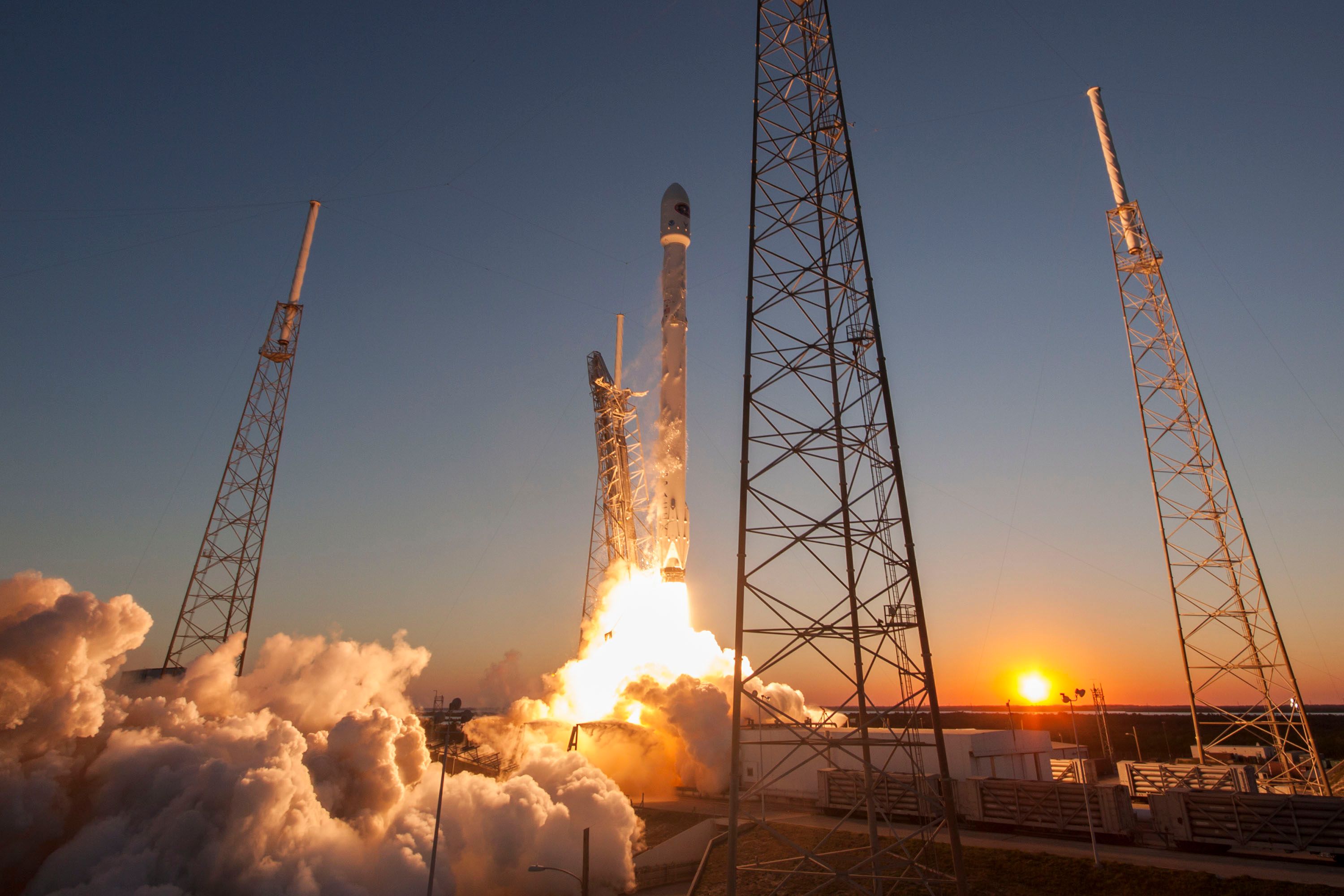
The record is measurable: SpaceX completed 165 orbital launches in 2025, up from 96 in 2023; reached its 400th orbital-class rocket landing by January 2025, its 600th Falcon booster landing by April 2026; and added more than 4.6 million active Starlink customers in 2025 alone. NASA’s Commercial Crew Programme also relies on private providers, including SpaceX, to transport astronauts to and from the International Space Station.
That record helps explain why SpaceX is now targeting one of the largest IPOs in history, with Reuters reporting that the company has set a $135 per-share price and is aiming to raise $75bn at an expected valuation of around $1.75tn. But a valuation of that scale does not rest on past achievements alone; it also requires investors to put a price on opportunities that may still be years away.
The key question is how much of SpaceX’s future success is already reflected in the IPO price, and whether the valuation leaves enough room for attractive investor returns if the company continues to deliver on its ambitions.
What Investors Are Really Buying in the SpaceX IPO
The challenge for investors is that SpaceX is no longer being valued as a rocket company. Investors are effectively buying several businesses at once.
Launch remains the foundation of the company, built on reusable rockets, high launch frequency and government and commercial contracts. Starlink provides the clearest commercial engine through recurring connectivity revenue. Starship represents the longer-term bet on significantly lower launch costs and new space infrastructure, while SpaceX is also becoming increasingly important in defence and national security through its satellite communications and launch capabilities.
Increasingly, investors are being asked to buy into an AI infrastructure story centred on compute capacity. The AI story comes through xAI, the Grok developer acquired by SpaceX in February 2026 in an all-stock deal that valued SpaceX at $1tn and xAI at $250bn. Because xAI had already absorbed X (formerly Twitter), the deal brought Grok, X, social data and large-scale compute infrastructure into the wider SpaceX group.
The AI point is important because it is no longer just a vague optionality argument in the SpaceX IPO. Recent reporting says Google has agreed to pay SpaceX $920mn per month from October 2026 to June 2029 for access to AI compute capacity, while Anthropic has reportedly agreed to pay $1.25bn per month through May 2029 for access to compute at the Colossus 1 facility. Goldman Sachs has gone further, reportedly forecasting that SpaceX’s AI division could grow from $3.2bn of revenue in 2025 to $322bn by 2030. But the numbers need careful treatment. Goldman is lead underwriter, the compute agreements reportedly include termination rights, including 90-day notice provisions, and xAI itself remains heavily loss-making. The deals strengthen the AI infrastructure story, but they do not yet prove the existence of durable, low-risk recurring revenue.
Alongside all of that sits the Musk factor, which is difficult to separate from the investment case. His vision, execution record and brand power help explain why SpaceX commands such attention, but they also bring governance and key-person risks that public investors will have to accept.
That breadth is what makes the valuation debate so difficult: investors are being asked to price several growth stories inside a single company.
Why Business Quality and Investment Quality Are Different
The heart of the IPO debate is the distinction between business quality and investment quality. Business quality is about the strength of SpaceX as a company: whether it has durable advantages, strong execution, growing markets, credible leadership and the ability to keep turning ambition into commercial reality. Investment quality is different; it asks whether the IPO price is attractive once future cash flows, execution risk, capital intensity and the possibility of disappointment are taken into account.
On the first point, the evidence is hard to dispute. SpaceX has built a dominant launch business, turned Starlink into its largest revenue contributor, and continued to grow quickly. But that does not settle the investment case, because the wider company reported a $4.9bn net loss in 2025 once results were recast to include the newly acquired xAI and X, showing how significant amounts of capital are still being absorbed by the wider growth story.
That makes the IPO less a simple bet on SpaceX’s past achievements, and more a judgement on whether those achievements can translate into future cash flows large enough to support the valuation, while still leaving room for attractive future returns. Reuters has reported a target valuation of around $1.75tn, while Morningstar has estimated fair value at $780bn, less than half that level. That gap shows the difference between believing in SpaceX and believing the IPO price is fair.
An extraordinary company can continue to lead its field and still deliver disappointing returns if the entry price has already captured years of future success. That is the distinction at the centre of the IPO: SpaceX can be an exceptional business without automatically being an attractive stock at the offered price.
Why the SpaceX Valuation Looks Like a Bet on Perfection
The reported numbers show why that distinction matters. A $1.75tn valuation against $18.67bn of 2025 revenue implies a trailing price-to-revenue multiple of roughly 94 times. Put simply, investors would be paying about $94 for every $1 of revenue SpaceX generated in 2025. That is well above what investors typically see in aerospace or telecoms, and significantly higher than the revenue multiples of most established mega-cap technology companies.
For context, Nvidia, Amazon and Alphabet are all valued in the trillions, but they trade on much lower trailing revenue multiples: roughly 23 times for Nvidia, around 10.6 times for Alphabet and around 3.5 times for Amazon. SpaceX is therefore being placed in the same broad mega-cap conversation, but from a much smaller revenue base, at a much higher revenue multiple, and while still loss-making overall.
That does not mean the valuation is automatically wrong, but it does show what investors are being asked to believe. The IPO price only really makes sense if today’s revenue base is a poor guide to SpaceX’s future scale, and if Starlink keeps growing, Starship becomes commercially viable, launch dominance holds, defence demand expands, and newer AI or infrastructure bets become meaningful sources of value. At this valuation, SpaceX needs to succeed across several ambitious fronts at once.
Starlink Is the Anchor of the SpaceX Investment Case
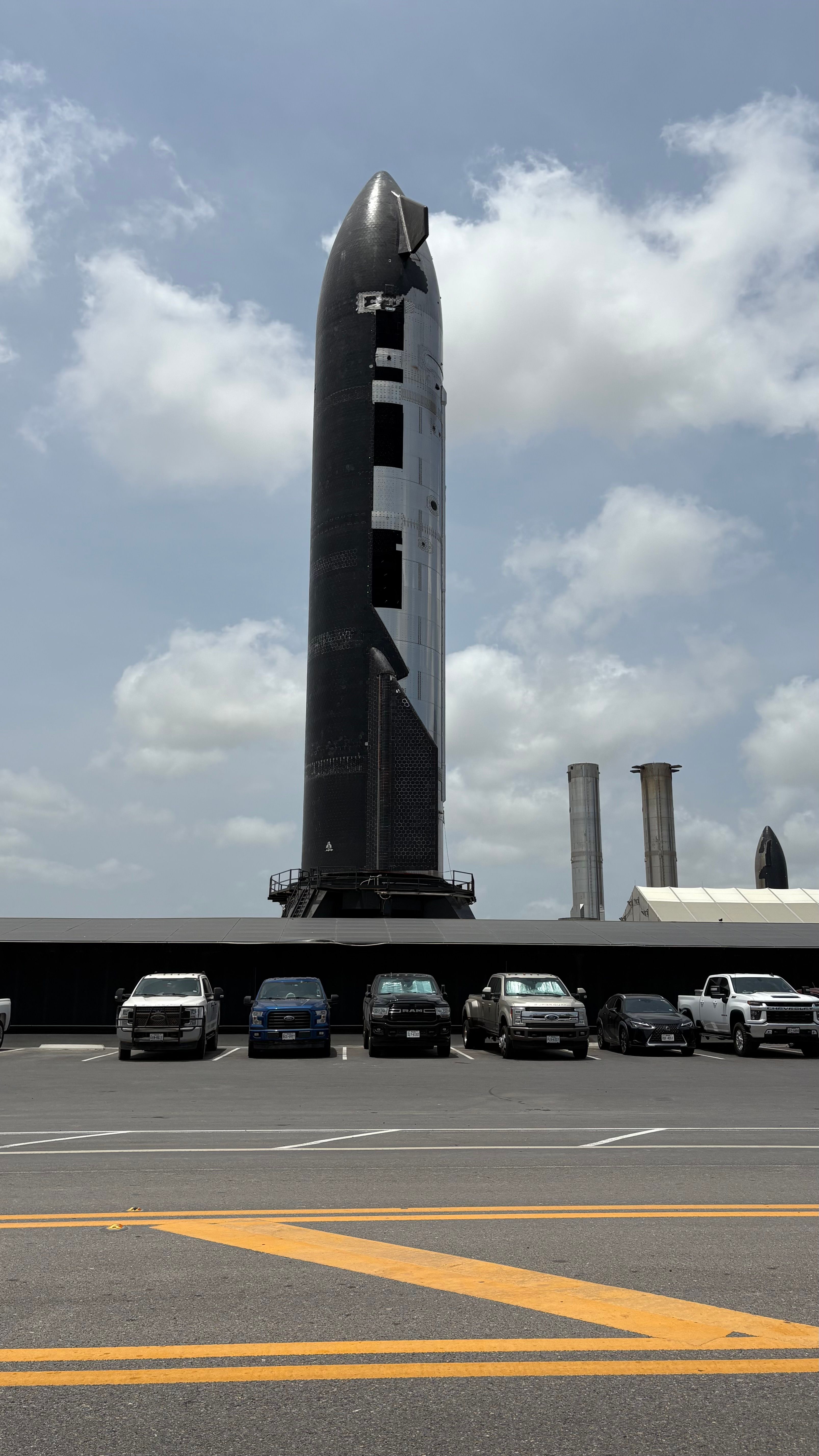
Starlink is the part of the SpaceX story that makes the IPO feel most financially grounded. For all the attention on rockets, Mars and Starship, Starlink gives SpaceX something closer to a conventional investment case: a fast-growing, recurring-revenue connectivity business with global reach.
In 2025, SpaceX’s Connectivity segment, driven by Starlink, generated $11.4bn of revenue and $4.4bn of operating income, accounting for around 61% of total revenue and standing out as the only segment to turn an operating profit. Its customer growth and continued international expansion reinforce the point: Starlink is no longer just a strategic asset, but the clearest financial anchor inside SpaceX.
That is why the IPO cannot be dismissed as pure hype. There is a real, scaled business underneath the story, and Starlink could justify a very large valuation if it continues to grow globally. But even a highly valuable Starlink may not be enough on its own to support the full reported IPO valuation, especially when the wider company remains loss-making, and the investment case also depends on Starship, launch dominance, defence relevance and future-facing bets.
Starlink may be the part of SpaceX that makes the IPO financially credible, but the full valuation requires investors to believe in much more than satellite broadband.
Why Investors May Still Pay a Premium for SpaceX
The premium is not random. There are clear reasons investors may value SpaceX differently from a traditional aerospace, telecoms or defence company.
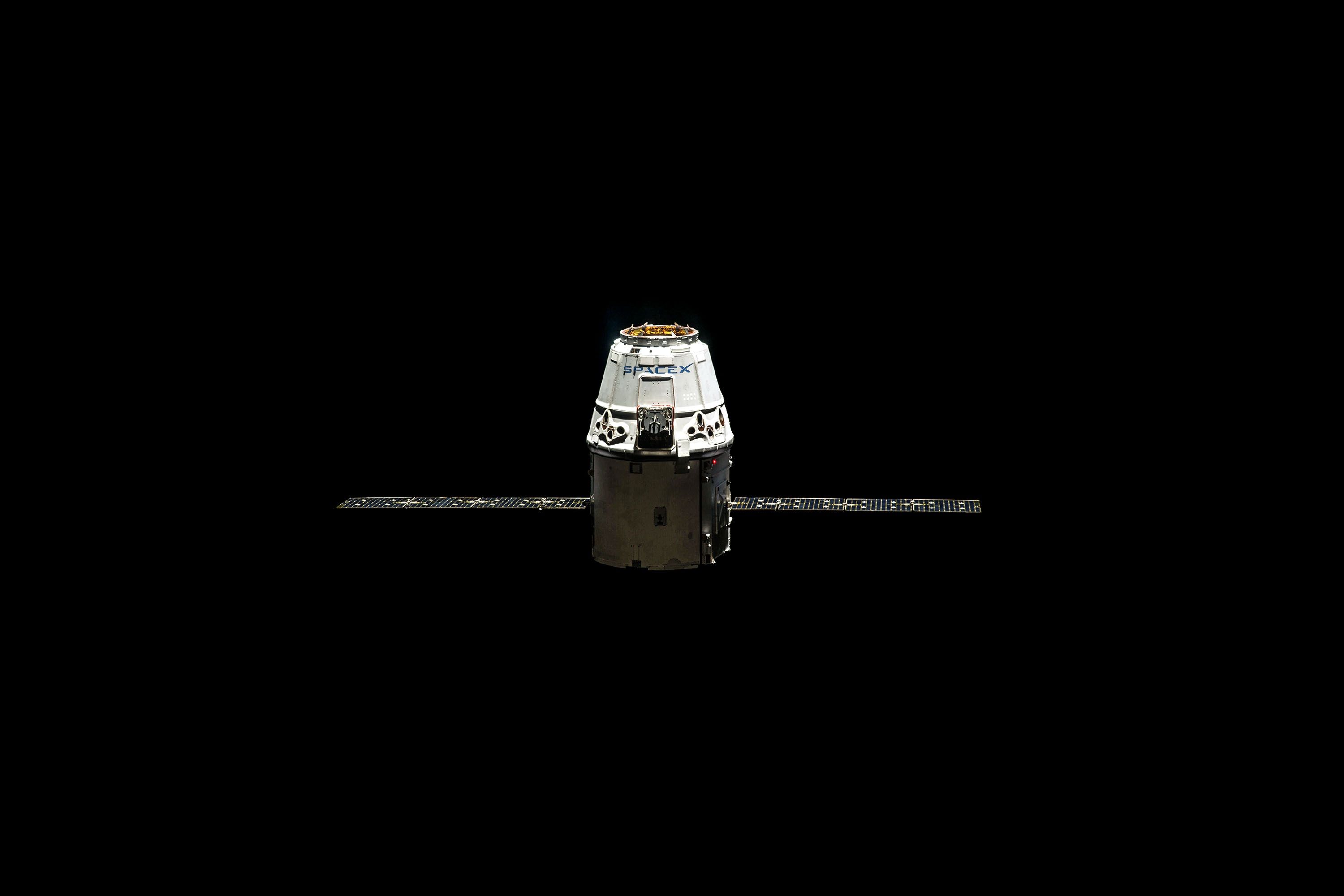
There is still a credible upside case. SpaceX has repeatedly turned ambitious technical goals into operational reality, from reusable orbital rockets to commercial crew transport and satellite broadband at a global scale. Reusability has moved from experiment to operating model, and that has helped create a launch cadence few competitors can match.
That advantage feeds directly into the rest of the business. Because SpaceX can launch its own satellites frequently and at scale, it has been able to build Starlink into the world’s largest low-Earth-orbit broadband network. At the same time, NASA’s Commercial Crew Programme shows how deeply SpaceX has become embedded in US space infrastructure. The bull case is therefore about more than consumer internet or commercial launches; it is about governments and companies relying more heavily on private space infrastructure for transport, communications, resilience and national security.
That all helps explain the premium; the question is how large that premium should be and whether the IPO price leaves enough room for new investors to benefit from the next phase of growth rather than simply paying for it upfront.
What Could Go Wrong After the SpaceX IPO?
The bear case does not require SpaceX to fail; it only requires the company to be worth less than the IPO price.
The first risk is execution. Starship is central to the long-term story, but it remains technically difficult and capital-intensive. The second is profitability. The company remains loss-making overall, meaning investors are being asked to believe that today’s heavy spending will eventually convert into durable profits.
Even if SpaceX continues to grow rapidly, investors may still face years of heavy investment in Starship, satellite replenishment and AI infrastructure before that growth translates into meaningful profits.
The AI segment adds another layer of risk. SpaceX's AI segment generated $3.2bn of revenue in 2025 but recorded an operating loss of around $6.36bn, and its S-1 filing shows the segment's first-quarter 2026 operating loss reached about $2.47bn on $818mn of revenue. That makes AI a major part of the upside story, but also one of the clearest sources of cash burn. SpaceX’s own risk disclosures have also pointed to regulatory inquiries around Grok-generated harmful imagery, which could expose the company to legal, reputational and market-access risks.
There is also a use-of-proceeds question. Reuters has reported that SpaceX took out a $20bn bridge loan ahead of the IPO to refinance existing debt, including facilities tied to X and xAI, and that IPO proceeds may be used to repay the loan if it is not refinanced through other sources. That does not mean the IPO is simply a cash-out for xAI investors, particularly since the offering is expected to be all-primary, but it does mean some of the proceeds may go toward cleaning up the broader Musk-company capital structure rather than directly funding new growth.
Competitive and regulatory risks extend beyond AI. Starlink is a powerful asset, but satellite broadband, mobile connectivity and AI are contested markets, and its plans to connect directly to mobile phones depend on telecoms partnerships and regulatory approval. Governance is another concern because a Musk-led structure gives public investors exposure not only to his vision and execution record but also to concentrated control and key-person risk. That concern is reinforced by the proposed dual-class structure, with public Class A shares carrying one vote each and Class B shares held by Musk and insiders carrying 10 votes each.
Finally, there is hype and re-rating risk. Reuters has reported that the IPO is already around two times oversubscribed, indicating strong demand before public trading begins. Scarcity can support a share price in the short term, but once SpaceX is public, it will be judged by quarterly results, margins, cash burn, delivery milestones, and whether the valuation remains defensible.
None of these risks makes SpaceX a weak company; they simply show why the IPO is difficult to assess.
The Wider Lesson from the SpaceX IPO
SpaceX also tells us something broader about public markets. Investors are increasingly being asked to value companies that combine real current revenue with huge future optionality. Nvidia’s valuation reflects current chip demand and expectations about the future of AI infrastructure. Palantir’s reflects software revenues and the possibility of becoming a core platform for AI-enabled government, defence and enterprise decision-making.
SpaceX fits the same pattern, but with the dial turned up: investors are not just pricing future growth, as they do in many IPOs, but assigning huge value to several markets that are still developing.
That is what makes the IPO such an interesting test case. SpaceX does not sit neatly in one category; it spans launch, satellite broadband, defence relevance, AI infrastructure and future space systems at once. That cross-sector position is part of what makes the company so valuable, but also what makes it so hard to value, because public markets are being asked to price several growth stories inside a single company.
The conclusion is not that SpaceX is overvalued simply because it is expensive. There are clear reasons investors may assign it a premium, but the core question is how large that premium should be. Investors need to judge whether the IPO price leaves room to benefit from the next phase of growth, or whether too much of that growth has already been reflected in today’s valuation. SpaceX has repeatedly shown that it can turn ambitious ideas into operational reality, but at this price, the market is also being asked to assign significant value to opportunities that remain uncertain. That is the risk for new shareholders: not that SpaceX fails, but that the IPO price already assumes too much of its success.
To understand how companies move from private ownership to public markets, watch James Eves’ video on IPOs.
Or, to explore the valuation questions behind deals like this in more depth, follow Sarah Martin's Corporate Valuations pathway on Finance Unlocked.
Jack Shrimpton
Share "Is SpaceX Worth Its $1.75tn IPO Valuation?" on
Latest Insights


Financial literacy training for employees: a practical guide for financial services organisations
21st June 2026 • Learning Adviser

Concentrated power, systemic fragility: The real lesson of the Greensill collapse
11th March 2026 • Learning Adviser

MFS wasn’t just a fraud story. It was a collateral-control failure.
6th March 2026 • Jack Shrimpton