






Featured Pathways

More pathways

Banking Essentials - Part I

This pathway will walk us through the basics of banks, starting with some of the different types and their main functions, then starting to look at the regulation faced by the banks, both before and after the Global Financial Crisis.

Greenwashing

Greenwashing is the act of distributing false information about something being more environmentally friendly than it actually is.

More pathways

Book a demo

Ready to get started?

Plans & Membership

Our Platform

Expert led content

+1,000 expert presented, on-demand video modules

Learning analytics

Keep track of learning progress with our comprehensive data

Interactive learning

Engage with our video hotspots and knowledge check-ins

Testing & certification

Gain CPD / CPE credits and professional certification

Managed learning

Build, scale and manage your organisation’s learning

Integrations

Connect Finance Unlocked to your current platform

Featured Content

More featured content

Tackling the Cost of Living Crisis

In this video, Max discusses the cost-of-living crisis currently enveloping the UK. He examines its impact on households as well as the overall economy.

Introduction to Corporate Valuation

In this video on Corporate Valuation, Sarah Martin covers the basic background to corporate valuations, who uses them, why they are needed and also outlines the factors that impact valuation.

More featured content

Book a demo

Ready to get started?

Featured Pathways

More pathways

Banking Essentials - Part I

This pathway will walk us through the basics of banks, starting with some of the different types and their main functions, then starting to look at the regulation faced by the banks, both before and after the Global Financial Crisis.

Greenwashing

Greenwashing is the act of distributing false information about something being more environmentally friendly than it actually is.

More pathways

Book a demo

Ready to get started?

Plans & Membership

Our Platform

Expert led content

+1,000 expert presented, on-demand video modules

Learning analytics

Keep track of learning progress with our comprehensive data

Interactive learning

Engage with our video hotspots and knowledge check-ins

Testing & certification

Gain CPD / CPE credits and professional certification

Managed learning

Build, scale and manage your organisation’s learning

Integrations

Connect Finance Unlocked to your current platform

Featured Content

More featured content

Tackling the Cost of Living Crisis

In this video, Max discusses the cost-of-living crisis currently enveloping the UK. He examines its impact on households as well as the overall economy.

Introduction to Corporate Valuation

In this video on Corporate Valuation, Sarah Martin covers the basic background to corporate valuations, who uses them, why they are needed and also outlines the factors that impact valuation.

More featured content

Book a demo

Ready to get started?

Book a demo

Ready to get started?

Ethical and Regulatory AI Considerations

Ethical and Regulatory AI Considerations

Paul dos Santos

Senior AI Engineer

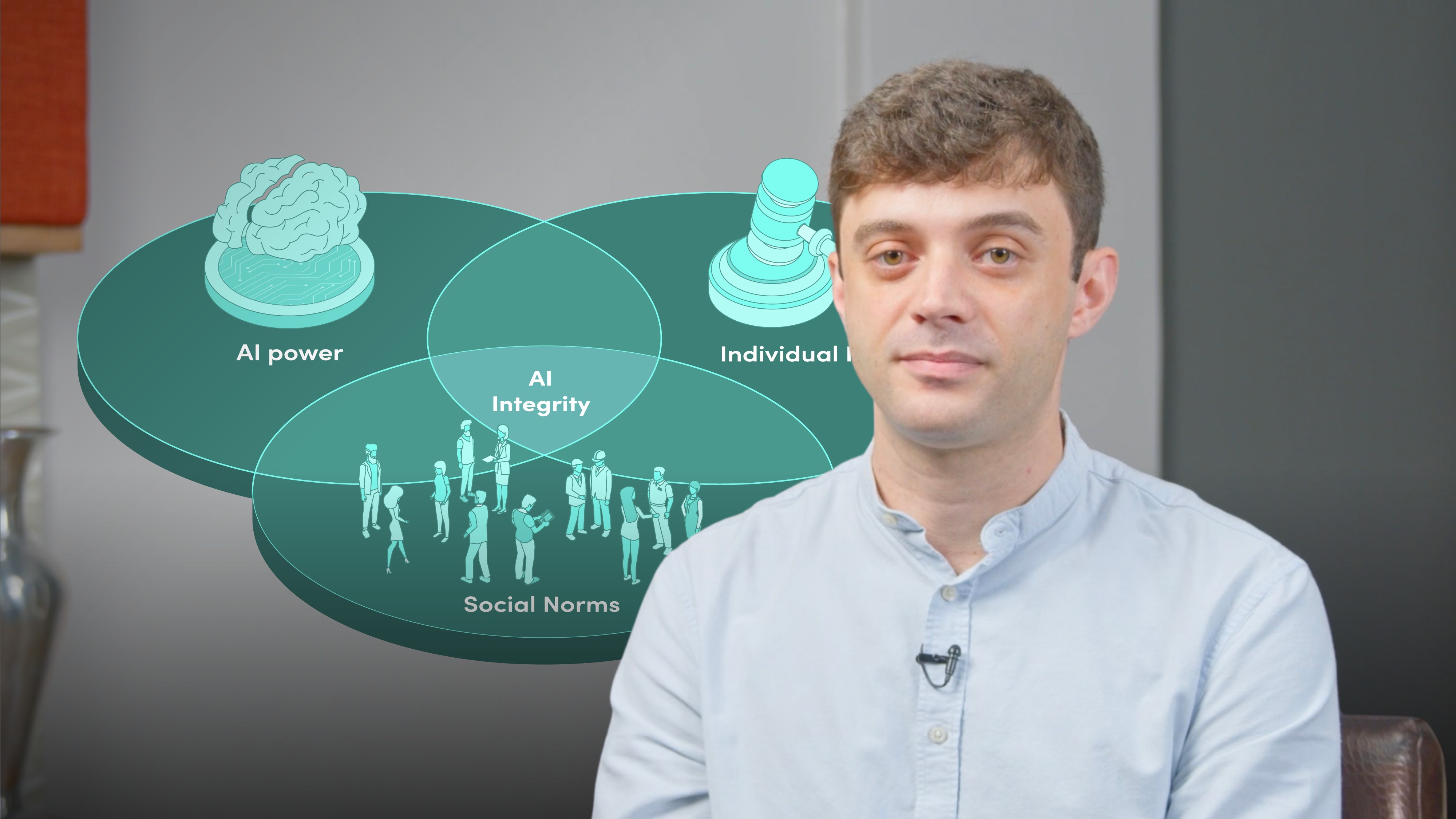
In this video, Paul explains the ethical and regulatory considerations essential for responsible AI use in financial services. He covers key issues like bias, fairness, and accountability, highlighting the importance of transparency and human oversight. Paul discusses AI’s impact on the workforce, focusing on talent enhancement and upskilling rather than job replacement. He also outlines strategies for navigating global regulations, ensuring compliance through data protection and transparency. He further shares best practices for responsible AI deployment, emphasising continuous learning and adaptation to address evolving challenges in AI ethics and regulations.

In this video, Paul explains the ethical and regulatory considerations essential for responsible AI use in financial services. He covers key issues like bias, fairness, and accountability, highlighting the importance of transparency and human oversight. Paul discusses AI’s impact on the workforce, focusing on talent enhancement and upskilling rather than job replacement. He also outlines strategies for navigating global regulations, ensuring compliance through data protection and transparency. He further shares best practices for responsible AI deployment, emphasising continuous learning and adaptation to address evolving challenges in AI ethics and regulations.

Subscribe to watch

Access this and all of the content on our platform by signing up for a 7-day free trial.

Ethical and Regulatory AI Considerations

13 mins 58 secs

Key learning objectives:

  • Understand core ethical concerns in AI, including bias, fairness, accountability, and the necessity of transparency and human oversight

  • Identify AI's impact on the workforce, emphasising the need for talent enhancement, upskilling, and adaptability

  • Understand how to navigate compliance by balancing ethical AI use with global regulations, focusing on data protection and transparency to build customer trust

  • Recognise the need for continuous learning and adaptation to effectively address evolving AI technologies and emerging ethical and regulatory challenges

Overview:

Ethical and regulatory considerations are paramount in deploying AI within financial services. Key concerns include bias, fairness, and accountability in AI systems, necessitating transparency and human oversight to prevent ethical failures like the British Post Office scandal. AI significantly impacts the workforce, emphasising talent enhancement and upskilling over job replacement. Navigating compliance involves balancing ethical use with varying global regulations, focusing on data protection and transparency to build trust. Best practices entail responsible AI deployment aligned with ethical principles and regulatory objectives, involving interdisciplinary teams to manage challenges effectively. Leading financial institutions demonstrate successful implementation of these strategies, ensuring responsible AI integration.

Subscribe to watch

Access this and all of the content on our platform by signing up for a 7-day free trial.

Summary
What are the core ethical concerns in AI deployment in finance, such as bias, fairness, and accountability?

The core ethical concerns in AI deployment within finance include bias, where AI systems may perpetuate or amplify existing prejudices present in training data, leading to unfair treatment of certain groups in lending or insurance decisions. Fairness is crucial to ensure that all individuals are treated equitably by AI algorithms. Accountability becomes challenging when AI models act as "black boxes," making it difficult to understand or explain their decision-making processes. Transparency and human oversight are essential to address these concerns, ensuring that AI systems are interpretable and that organizations remain responsible for their AI-driven decisions.

How does AI impact the finance workforce, and what ethical considerations arise between replacing and enhancing talent, and emphasising upskilling?

AI impacts the finance workforce by automating repetitive and standardised tasks, which can lead to job displacement. The ethical consideration lies in choosing between replacing employees or enhancing their roles through AI integration. Emphasising talent enhancement involves upskilling employees to work alongside AI, focusing on higher-value tasks that require human judgment and creativity. This approach supports workforce adaptability and mitigates ethical issues related to unemployment. Organisations have a responsibility to invest in training and development, ensuring their employees can thrive in an AI-augmented environment rather than being left behind.

How can financial institutions navigate compliance and ensure transparency in AI applications amid varying global regulations?

Financial institutions can navigate compliance by staying informed about global regulatory developments, such as the EU Artificial Intelligence Act, and aligning their AI practices accordingly. Ensuring transparency involves adopting explainable AI models that make decision-making processes understandable to users, regulators, and other stakeholders. Institutions should focus on robust data protection measures and clear documentation to meet regulatory requirements. By balancing ethical AI use with compliance efforts, and fostering open communication about how AI systems operate, organisations can build trust and effectively manage the challenges posed by differing international regulations.

What best practices enable responsible AI deployment that aligns with ethical principles and regulatory objectives?

Best practices for responsible AI deployment include forming interdisciplinary teams that bring together technologists, ethicists, and legal experts to oversee AI initiatives. Organisations should use diverse and representative data to train AI models, reducing the risk of bias. Implementing rigorous testing and continuous monitoring helps ensure fairness and accuracy. Transparency is vital; using explainable AI allows stakeholders to understand and trust AI decisions. Aligning AI strategies with ethical principles and regulatory objectives involves adhering to data governance standards, maintaining thorough documentation, and prioritising accountability throughout the AI lifecycle.

Why is continuous learning and adaptation essential for organisations to address evolving AI technologies and emerging ethical and regulatory challenges?

Continuous learning and adaptation are crucial because AI technologies and the associated ethical and regulatory landscapes are rapidly evolving. Organisations must keep pace with technological advancements to remain competitive and compliant. Investing in employee upskilling ensures the workforce is equipped to handle new AI tools and methodologies. Staying informed about emerging ethical considerations and regulatory changes allows organisations to proactively adjust their policies and practices. This ongoing commitment to learning fosters resilience, enabling organisations to effectively navigate challenges and maintain ethical standards in a dynamic environment.

Subscribe to watch

Access this and all of the content on our platform by signing up for a 7-day free trial.

Paul dos Santos

Paul dos Santos

Paul dos Santos is a data professional with over a decade of experience, currently working as a Senior AI Engineer for Imagimob (an Infineon company). With a background in Geographic Information Science, he has developed AI systems across various industries, including consulting, manufacturing, social impact, and healthcare, using advanced data science techniques.

There are no available Videos from "Paul dos Santos"