





Featured Pathways

More pathways

Banking Essentials - Part I

This pathway will walk us through the basics of banks, starting with some of the different types and their main functions, then starting to look at the regulation faced by the banks, both before and after the Global Financial Crisis.

Greenwashing

Greenwashing is the act of distributing false information about something being more environmentally friendly than it actually is.

More pathways

Book a demo

Ready to get started?

Plans & Membership

Our Platform

Expert led content

+1,000 expert presented, on-demand video modules

Learning analytics

Keep track of learning progress with our comprehensive data

Interactive learning

Engage with our video hotspots and knowledge check-ins

Testing & certification

Gain CPD / CPE credits and professional certification

Managed learning

Build, scale and manage your organisation’s learning

Integrations

Connect Finance Unlocked to your current platform

Featured Content

More featured content

Tackling the Cost of Living Crisis

In this video, Max discusses the cost-of-living crisis currently enveloping the UK. He examines its impact on households as well as the overall economy.

Introduction to Corporate Valuation

In this video on Corporate Valuation, Sarah Martin covers the basic background to corporate valuations, who uses them, why they are needed and also outlines the factors that impact valuation.

More featured content

Book a demo

Ready to get started?

Featured Pathways

More pathways

Banking Essentials - Part I

This pathway will walk us through the basics of banks, starting with some of the different types and their main functions, then starting to look at the regulation faced by the banks, both before and after the Global Financial Crisis.

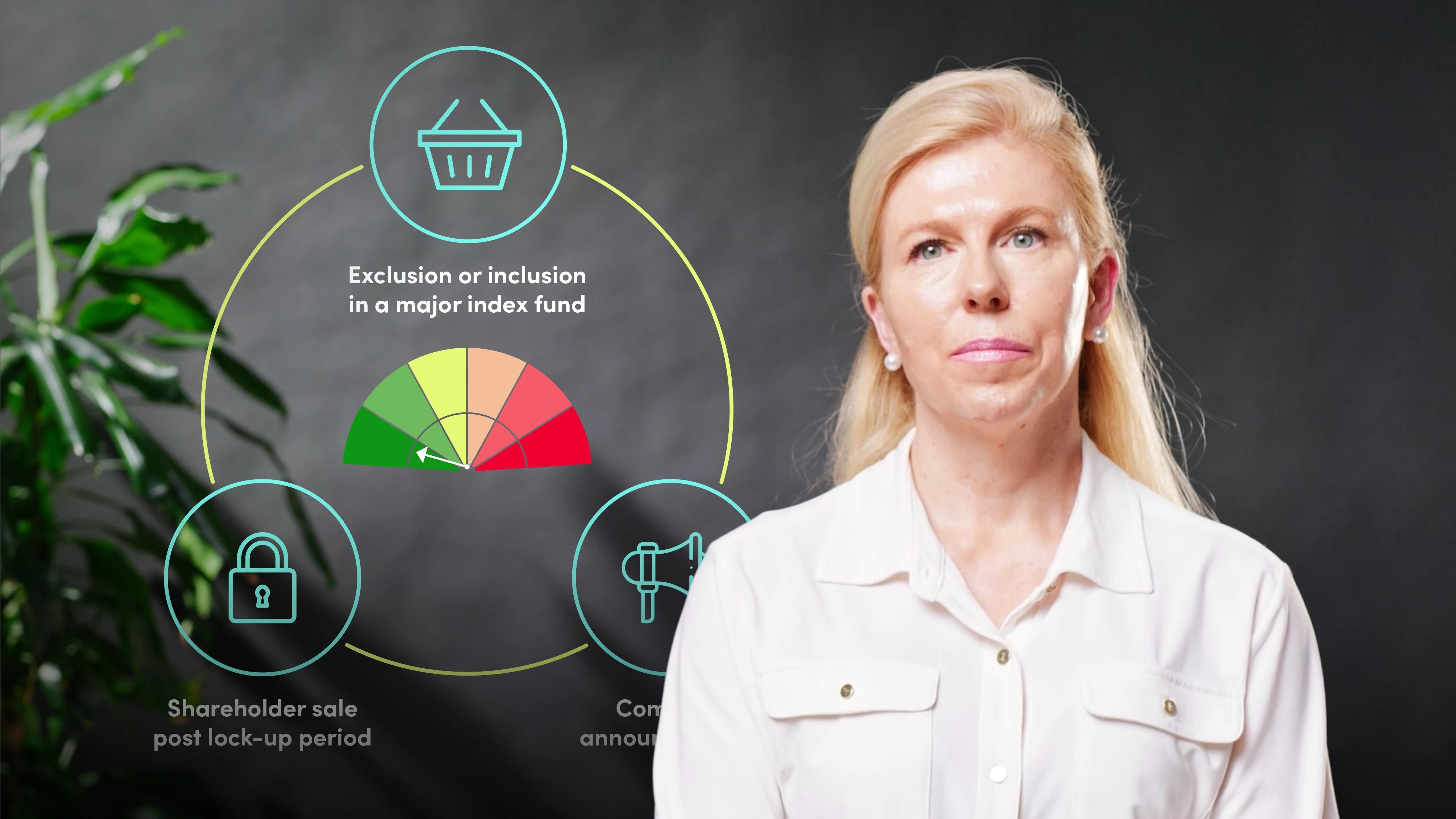
Greenwashing

Greenwashing is the act of distributing false information about something being more environmentally friendly than it actually is.

More pathways

Book a demo

Ready to get started?

Plans & Membership

Our Platform

Expert led content

+1,000 expert presented, on-demand video modules

Learning analytics

Keep track of learning progress with our comprehensive data

Interactive learning

Engage with our video hotspots and knowledge check-ins

Testing & certification

Gain CPD / CPE credits and professional certification

Managed learning

Build, scale and manage your organisation’s learning

Integrations

Connect Finance Unlocked to your current platform

Featured Content

More featured content

Tackling the Cost of Living Crisis

In this video, Max discusses the cost-of-living crisis currently enveloping the UK. He examines its impact on households as well as the overall economy.

Introduction to Corporate Valuation

In this video on Corporate Valuation, Sarah Martin covers the basic background to corporate valuations, who uses them, why they are needed and also outlines the factors that impact valuation.

More featured content

Book a demo

Ready to get started?

Book a demo

Ready to get started?

Problem Clarity First, GenAI Solution Second

Problem Clarity First, GenAI Solution Second

Sofie Holm Stenstrop

Head of GenAI Journey & Innovation

GenAI initiatives often struggle early because the problem they aim to solve is not clearly defined. Join Sofie Holm Stenstrop from Danske Bank and learn how to define meaningful use cases, align stakeholders, and build the right foundation for real business value.

GenAI initiatives often struggle early because the problem they aim to solve is not clearly defined. Join Sofie Holm Stenstrop from Danske Bank and learn how to define meaningful use cases, align stakeholders, and build the right foundation for real business value.

Subscribe to watch

Access this and all of the content on our platform by signing up for a 7-day free trial.

Problem Clarity First, GenAI Solution Second

9 mins 19 secs

Key learning objectives:

  • Define clear, outcome-focused problem statements for using GenAI effectively

  • Identify important factors that lead to lasting GenAI success

  • Learn to distinguish between vague and clear problem statements

  • Apply a GenAI decision framework to assess feasibility, ownership, and impact

Overview:

Clear problem definition plays an important role in realising GenAI’s potential value. Vague ambitions can lead to weak use cases, while stronger problem framing helps sharpen focus, align stakeholders, and support measurable outcomes.

Assessing feasibility, ownership, data readiness, and expected impact is an important step before moving forward. Without these foundations, even promising initiatives may struggle to progress.

A structured approach to problem definition can help identify viable use cases and focus efforts on improving time, cost, quality, or risk in a meaningful way.

Subscribe to watch

Access this and all of the content on our platform by signing up for a 7-day free trial.

Summary
What is the starting point for creating GenAI value?
GenAI value starts with clarity about the problem being solved. Without this, efforts tend to drift towards interesting technology rather than meaningful outcomes. A clearly defined problem acts as a foundation for everything that follows, shaping decisions around design, feasibility, ownership, and success measures. It ensures that GenAI is applied with purpose, rather than as an experiment in search of a use case.

Why do many GenAI initiatives fail early?
Most GenAI initiatives fail not because the technology is insufficient, but because the surrounding conditions are not ready. Weak problem definition, lack of alignment between stakeholders, unclear ownership, and gaps in data or processes all limit progress. In many cases, teams move too quickly into building solutions without first establishing whether the problem is real, relevant, or solvable in a scalable way.

What does a strong problem statement look like?
A strong problem statement clearly defines what is happening, who is affected, why it matters, and what outcome is expected. It connects the issue to a tangible business impact, such as delays, inefficiencies, risk exposure, or reduced quality. Importantly, it does not start with the technology. Instead, it focuses on the underlying challenge and the improvement required, which then informs whether GenAI is the right solution.

How can you distinguish between vague and actionable problems?
Vague problems are often broad and lack clear ownership or measurable impact. They describe symptoms rather than root causes and make it difficult to define success. Actionable problems, in contrast, are specific and grounded in real workflows. They identify who is affected, what is not working, and what needs to improve. This level of clarity enables better decision-making and increases the likelihood of delivering meaningful value.

What conditions need to be in place for success?
Successful GenAI initiatives depend on more than just the idea itself. They require reliable and accessible data, clear ownership and accountability, alignment across stakeholders, and the right infrastructure and processes to support development and adoption. GenAI often exposes weaknesses in these areas, so addressing them early is critical to avoid delays or failure later in the process.

How can teams assess whether to move forward?
Before moving into development, teams should apply a structured decision framework. This involves confirming that the problem is real and clearly defined, ensuring that ownership is established, and assessing whether the solution can scale safely and deliver measurable impact. This approach helps prioritise the right use cases and prevents time and resources being spent on initiatives that are unlikely to succeed.

Subscribe to watch

Access this and all of the content on our platform by signing up for a 7-day free trial.

Sofie Holm Stenstrop

Sofie Holm Stenstrop

Sofie Holm Stenstrop is the Head of GenAI Journey & Innovation area at Danske Bank. Her background is in digital transformation and business strategy. She has extensive experience in translating complex technology into something people understand, use and believe in. She is a specialist in turning ideas into real impact, and exploring how a new way of thinking changes how we work and lead.

There are no available Videos from "Sofie Holm Stenstrop"