






Featured Pathways

More pathways

Banking Essentials - Part I

This pathway will walk us through the basics of banks, starting with some of the different types and their main functions, then starting to look at the regulation faced by the banks, both before and after the Global Financial Crisis.

Greenwashing

Greenwashing is the act of distributing false information about something being more environmentally friendly than it actually is.

More pathways

Book a demo

Ready to get started?

Plans & Membership

Our Platform

Expert led content

+1,000 expert presented, on-demand video modules

Learning analytics

Keep track of learning progress with our comprehensive data

Interactive learning

Engage with our video hotspots and knowledge check-ins

Testing & certification

Gain CPD / CPE credits and professional certification

Managed learning

Build, scale and manage your organisation’s learning

Integrations

Connect Finance Unlocked to your current platform

Featured Content

More featured content

Tackling the Cost of Living Crisis

In this video, Max discusses the cost-of-living crisis currently enveloping the UK. He examines its impact on households as well as the overall economy.

Introduction to Corporate Valuation

In this video on Corporate Valuation, Sarah Martin covers the basic background to corporate valuations, who uses them, why they are needed and also outlines the factors that impact valuation.

More featured content

Book a demo

Ready to get started?

Featured Pathways

More pathways

Banking Essentials - Part I

This pathway will walk us through the basics of banks, starting with some of the different types and their main functions, then starting to look at the regulation faced by the banks, both before and after the Global Financial Crisis.

Greenwashing

Greenwashing is the act of distributing false information about something being more environmentally friendly than it actually is.

More pathways

Book a demo

Ready to get started?

Plans & Membership

Our Platform

Expert led content

+1,000 expert presented, on-demand video modules

Learning analytics

Keep track of learning progress with our comprehensive data

Interactive learning

Engage with our video hotspots and knowledge check-ins

Testing & certification

Gain CPD / CPE credits and professional certification

Managed learning

Build, scale and manage your organisation’s learning

Integrations

Connect Finance Unlocked to your current platform

Featured Content

More featured content

Tackling the Cost of Living Crisis

In this video, Max discusses the cost-of-living crisis currently enveloping the UK. He examines its impact on households as well as the overall economy.

Introduction to Corporate Valuation

In this video on Corporate Valuation, Sarah Martin covers the basic background to corporate valuations, who uses them, why they are needed and also outlines the factors that impact valuation.

More featured content

Book a demo

Ready to get started?

Book a demo

Ready to get started?

Turning Data into Outcomes

Turning Data into Outcomes

Christoffer Kanstrup

Chief Data Officer

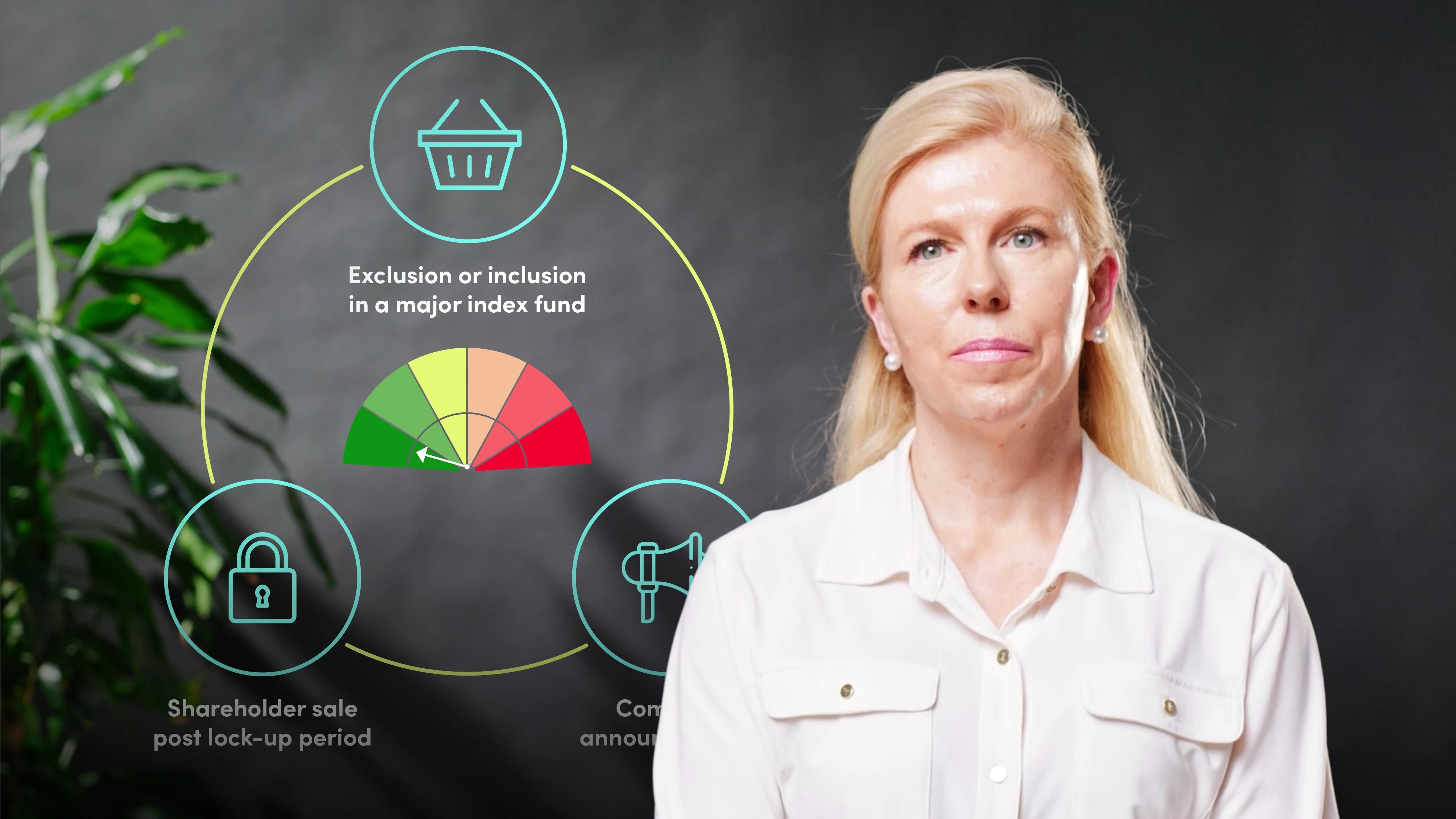
In this video, Christoffer draws on Danske Bank’s experience building its “Data Supermarket” to share practical lessons on how organisations can move beyond data overload to actionable insights. He explains how treating data as a product enables faster insights, stronger decision-making, and reliable AI adoption.

In this video, Christoffer draws on Danske Bank’s experience building its “Data Supermarket” to share practical lessons on how organisations can move beyond data overload to actionable insights. He explains how treating data as a product enables faster insights, stronger decision-making, and reliable AI adoption.

Subscribe to watch

Access this and all of the content on our platform by signing up for a 7-day free trial.

Turning Data into Outcomes

10 mins 20 secs

Key learning objectives:

  • Understand how modern organisations can overcome barriers to data-driven decision-making

  • Identify the concept of a “Data Supermarket” and its benefits

  • Describe five core drivers of effective data strategies

  • Outline how treating data as a product creates a foundation for AI adoption and competitive advantage

Overview:

Organisations today are flooded with data, but often struggle to turn it into trusted, actionable insight. Many are shifting towards treating data as a product, creating platforms where high-quality, compliant, and reusable datasets are readily available. This approach, sometimes described as a “Data Supermarket”, enables faster insights, stronger decision-making, and a foundation for robust AI models. By embedding privacy by design, fostering trusted data products, and enabling self-service access, companies can transform how teams work with data and build a competitive edge in the age of AI.

Subscribe to watch

Access this and all of the content on our platform by signing up for a 7-day free trial.

Summary
What challenge do organisations face with data today?
The problem is rarely a lack of data, but rather the difficulty of finding, trusting, and using it effectively. Data often sits in silos, is poorly documented, or isn’t reliable enough to act on. To compete, organisations need more than dashboards; they need systems that make data accessible, reusable, and high-quality by design. This shift unlocks better decisions, faster insights, and a foundation for AI and analytics.

What is a “Data Supermarket” and why does it matter?
A Data Supermarket is a way of managing and distributing trusted, certified data products. Just like shopping in a well-organised store, users can quickly find the data they need, packaged with documentation and compliance checks. This saves time, reduces duplication, and ensures consistent standards. Whether it’s customer insights, risk metrics, or operational data, making trusted datasets available as products empowers teams to act quickly and confidently.

What are the value drivers of a strong data strategy?
Five drivers underpin effective modern data strategies:
  1. Easier access through standardised, self-service tools
  2. Fostering AI-driven value creation with reliable inputs
  3. Accelerating time to insight by reducing preparation work
  4. Increasing trust through certification and transparent metadata
  5. Protecting personal data with privacy by design

Together, these principles allow organisations to scale insights, support innovation, and maintain compliance while ensuring customer trust.

How does this enable AI and real-world applications?
Trusted data products create the foundation for AI to deliver reliable outcomes. For example, in credit risk, healthcare, or supply chain optimisation, teams using certified datasets can build AI models that predict trends and manage risks more effectively. Because the data is clean, standardised, and compliant, these models perform better and can be scaled across use cases. Treating data as a product enables organisations in any sector to translate raw information into intelligence and competitive advantage.

Subscribe to watch

Access this and all of the content on our platform by signing up for a 7-day free trial.

There are no available Videos from "Christoffer Kanstrup"