







Featured Pathways

More pathways

Banking Essentials - Part I

This pathway will walk us through the basics of banks, starting with some of the different types and their main functions, then starting to look at the regulation faced by the banks, both before and after the Global Financial Crisis.

Greenwashing

Greenwashing is the act of distributing false information about something being more environmentally friendly than it actually is.

More pathways

Book a demo

Ready to get started?

Plans & Membership

Our Platform

Expert led content

+1,000 expert presented, on-demand video modules

Learning analytics

Keep track of learning progress with our comprehensive data

Interactive learning

Engage with our video hotspots and knowledge check-ins

Testing & certification

Gain CPD / CPE credits and professional certification

Managed learning

Build, scale and manage your organisation’s learning

Integrations

Connect Finance Unlocked to your current platform

Featured Content

More featured content

Tackling the Cost of Living Crisis

In this video, Max discusses the cost-of-living crisis currently enveloping the UK. He examines its impact on households as well as the overall economy.

Introduction to Corporate Valuation

In this video on Corporate Valuation, Sarah Martin covers the basic background to corporate valuations, who uses them, why they are needed and also outlines the factors that impact valuation.

More featured content

Book a demo

Ready to get started?

Featured Pathways

More pathways

Banking Essentials - Part I

This pathway will walk us through the basics of banks, starting with some of the different types and their main functions, then starting to look at the regulation faced by the banks, both before and after the Global Financial Crisis.

Greenwashing

Greenwashing is the act of distributing false information about something being more environmentally friendly than it actually is.

More pathways

Book a demo

Ready to get started?

Plans & Membership

Our Platform

Expert led content

+1,000 expert presented, on-demand video modules

Learning analytics

Keep track of learning progress with our comprehensive data

Interactive learning

Engage with our video hotspots and knowledge check-ins

Testing & certification

Gain CPD / CPE credits and professional certification

Managed learning

Build, scale and manage your organisation’s learning

Integrations

Connect Finance Unlocked to your current platform

Featured Content

More featured content

Tackling the Cost of Living Crisis

In this video, Max discusses the cost-of-living crisis currently enveloping the UK. He examines its impact on households as well as the overall economy.

Introduction to Corporate Valuation

In this video on Corporate Valuation, Sarah Martin covers the basic background to corporate valuations, who uses them, why they are needed and also outlines the factors that impact valuation.

More featured content

Book a demo

Ready to get started?

Book a demo

Ready to get started?

AML in Practice

AML in Practice

Jodie McCaffrey

Financial Crime Expert

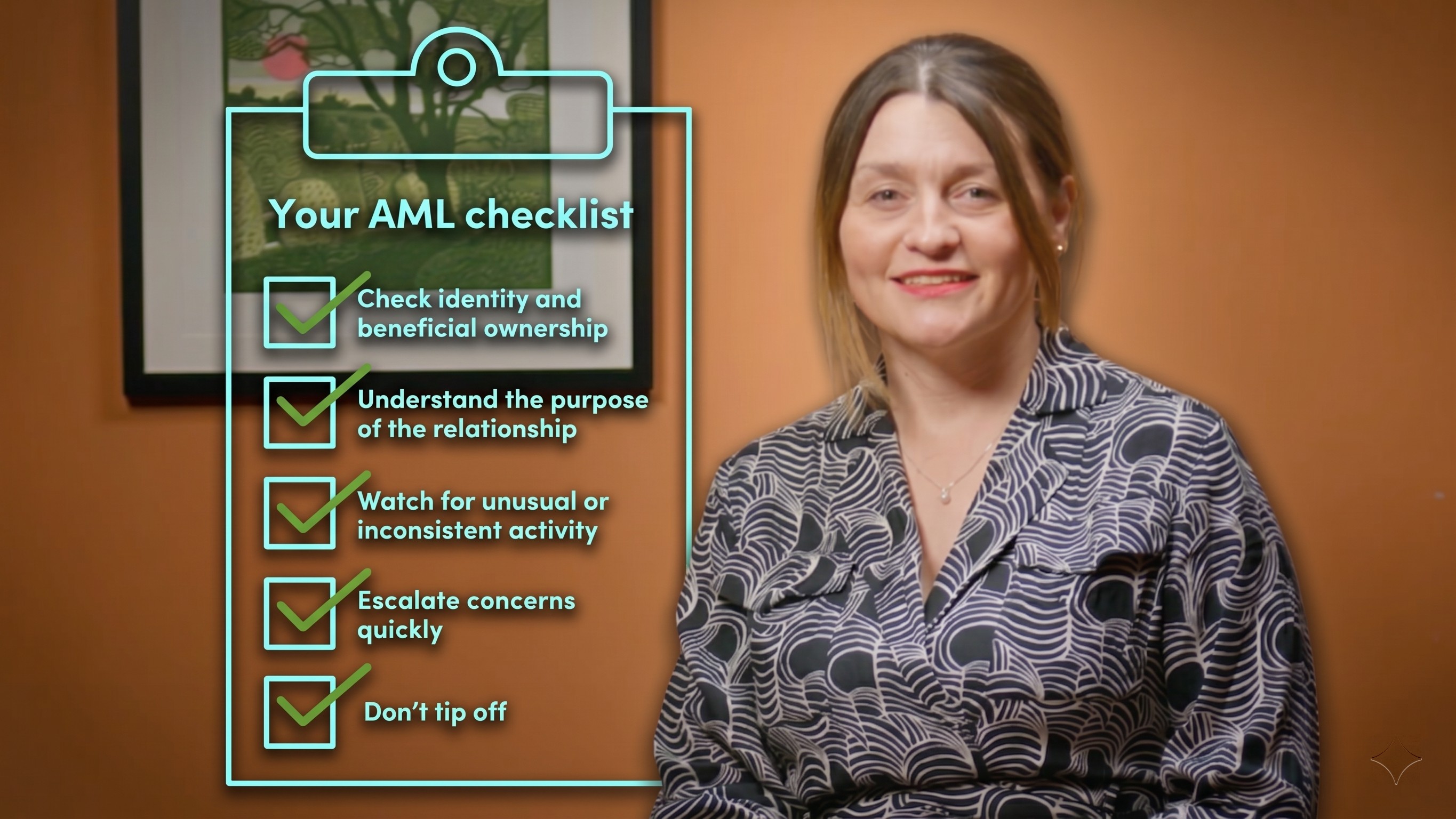
See how EU AML compliance is changing in practice. This video explains the move towards a more unified, technology-driven framework, what AMLA and the new AML Regulation mean for firms, and the simple Monday morning checklist employees can use to apply AML controls confidently day to day.

See how EU AML compliance is changing in practice. This video explains the move towards a more unified, technology-driven framework, what AMLA and the new AML Regulation mean for firms, and the simple Monday morning checklist employees can use to apply AML controls confidently day to day.

Subscribe to watch

Access this and all of the content on our platform by signing up for a 7-day free trial.

AML in Practice

3 mins 28 secs

Key learning objectives:

  • Understand the direction of EU AML reforms and the role of AMLA

  • Identify how regulatory expectations for firms are changing

  • Apply a practical AML checklist to day-to-day activities

Overview:

The EU AML framework is moving towards a more unified, consistent, and centrally coordinated model, reducing regulatory fragmentation across Member States. The creation of AMLA, the introduction of a directly applicable AML Regulation, and the expansion of AML obligations to new sectors reflect a shift towards stronger supervision, greater transparency, and enhanced information sharing. For firms, this means higher expectations around customer due diligence, beneficial ownership verification, monitoring, escalation, and governance. Effective AML compliance increasingly depends not only on having controls in place, but on applying them consistently, documenting decisions, and adapting controls as risks evolve.

Subscribe to watch

Access this and all of the content on our platform by signing up for a 7-day free trial.

Summary
What is changing in the EU AML framework?
The EU is moving towards a more harmonised AML regime through a single rulebook, stronger cross-border supervision, and greater cooperation between regulators and Financial Intelligence Units. AMLA will help drive consistency across Member States, while new rules expand AML obligations to sectors such as crypto-assets, crowdfunding, and professional football clubs.

What does AMLA do?
AMLA is the EU's new Anti-Money Laundering Authority. It will directly supervise certain high-risk cross-border firms, coordinate national supervisors and FIUs, identify emerging financial crime risks, and help ensure AML requirements are applied consistently across the EU. Its creation reflects the EU’s desire to reduce regulatory gaps and improve supervisory effectiveness.

How will these reforms affect firms in practice?
Firms will face increased expectations around customer due diligence, beneficial ownership transparency, transaction monitoring, escalation procedures, and governance. Regulators will increasingly expect firms to demonstrate not only that controls exist, but that they are applied consistently, properly documented, regularly reviewed, and responsive to changing risks.

What should employees focus on in their day-to-day AML responsibilities?
A practical AML approach can be summarised in five actions: verify customer identity and beneficial ownership, understand the purpose of the relationship, monitor for unusual activity, escalate concerns promptly, and never tip off customers. Employees are not expected to prove money laundering; their responsibility is to recognise potential concerns and ensure they are reviewed through the appropriate channels.

Subscribe to watch

Access this and all of the content on our platform by signing up for a 7-day free trial.

Jodie McCaffrey

Jodie McCaffrey

Jodie McCaffrey is an experienced Head of Compliance with a demonstrated history of working in the financial services industry. She is well versed in the areas relating to financial regulation, data protection and commercial contracts. She is also a strong legal professional with regulatory enforcement background. Jodie is currently the Head of Compliance at Hyundai Capital UK and has been at this role since 2017.

There are no available Videos from "Jodie McCaffrey"