





Featured Pathways

More pathways

Banking Essentials - Part I

This pathway will walk us through the basics of banks, starting with some of the different types and their main functions, then starting to look at the regulation faced by the banks, both before and after the Global Financial Crisis.

Greenwashing

Greenwashing is the act of distributing false information about something being more environmentally friendly than it actually is.

More pathways

Book a demo

Ready to get started?

Our Platform

Expert led content

+1,000 expert presented, on-demand video modules

Learning analytics

Keep track of learning progress with our comprehensive data

Interactive learning

Engage with our video hotspots and knowledge check-ins

Testing & certification

Gain CPD / CPE credits and professional certification

Managed learning

Build, scale and manage your organisation’s learning

Integrations

Connect Finance Unlocked to your current platform

Featured Content

More featured content

Tackling the Cost of Living Crisis

In this video, Max discusses the cost-of-living crisis currently enveloping the UK. He examines its impact on households as well as the overall economy.

CSR and Sustainability in Financial Services

In the first video of this two-part video series, Elisa introduces us to sustainability. She begins by looking at the difference between sustainability and corporate social responsibility, two terms that can be easily confused.

More featured content

Book a demo

Ready to get started?

Featured Pathways

More pathways

Banking Essentials - Part I

This pathway will walk us through the basics of banks, starting with some of the different types and their main functions, then starting to look at the regulation faced by the banks, both before and after the Global Financial Crisis.

Greenwashing

Greenwashing is the act of distributing false information about something being more environmentally friendly than it actually is.

More pathways

Book a demo

Ready to get started?

Our Platform

Expert led content

+1,000 expert presented, on-demand video modules

Learning analytics

Keep track of learning progress with our comprehensive data

Interactive learning

Engage with our video hotspots and knowledge check-ins

Testing & certification

Gain CPD / CPE credits and professional certification

Managed learning

Build, scale and manage your organisation’s learning

Integrations

Connect Finance Unlocked to your current platform

Featured Content

More featured content

Tackling the Cost of Living Crisis

In this video, Max discusses the cost-of-living crisis currently enveloping the UK. He examines its impact on households as well as the overall economy.

CSR and Sustainability in Financial Services

In the first video of this two-part video series, Elisa introduces us to sustainability. She begins by looking at the difference between sustainability and corporate social responsibility, two terms that can be easily confused.

More featured content

Book a demo

Ready to get started?

Book a demo

Ready to get started?

How Human Behaviour Shapes Financial Data

How Human Behaviour Shapes Financial Data

Greg B Davies

Head of Behavioural Finance

Join Greg Davies and discover how behavioural data reveal what drives financial decisions, combining transactions, interactions, and personality to improve advice, outcomes, and compliance.

Join Greg Davies and discover how behavioural data reveal what drives financial decisions, combining transactions, interactions, and personality to improve advice, outcomes, and compliance.

Subscribe to watch

Access this and all of the content on our platform by signing up for a 7-day free trial.

How Human Behaviour Shapes Financial Data

14 mins 31 secs

Key learning objectives:

  • Define behavioural data and distinguish between transactional, interaction, and financial-personality data

  • Understand how behavioural data reveal emotions, motivations, and decision-making patterns

  • Identify regulatory expectations requiring firms to monitor and act on behavioural insights

  • Apply practical strategies for integrating behavioural data into client support and compliance

Overview:

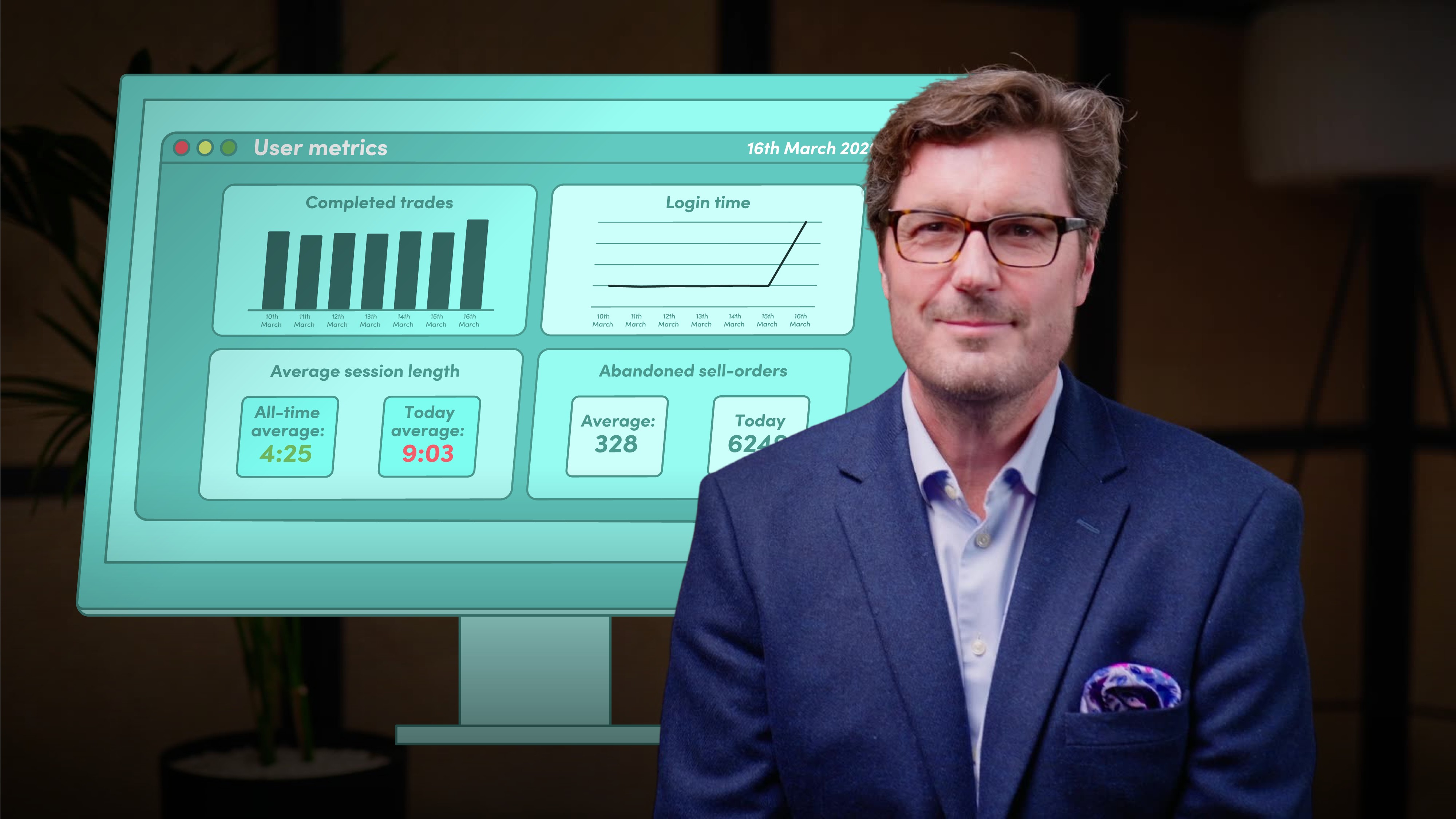
Behavioural data reveal not just what people do, but how and why they do it. They capture decisions in action (trades, logins, hesitations) and connect them with deeper emotional signals and personality traits. Transactional, interaction, and financial-personality data together provide a fuller picture of client behaviour, allowing advisers to anticipate risks and tailor support. Used carefully, behavioural data improve financial outcomes and meet regulatory expectations, but without rigour, they risk becoming noise. Their power lies in empathetic, context-driven interpretation that transforms numbers into genuine human insight.

Subscribe to watch

Access this and all of the content on our platform by signing up for a 7-day free trial.

Summary
What are behavioural data and why do they matter?
Behavioural data go beyond financial records to reveal how people make decisions and how emotions influence their choices. They capture actions (transactions), decision processes (interactions), and stable traits (financial personality). 

Together, these provide a multidimensional view of client behaviour, enabling advisers to move past assumptions and better understand the fears, doubts, or confidence shaping financial decisions.

What are the three types of behavioural data?
  1. Transactional data show revealed preferences through actions like trades, deposits, or product switches
  2. Interaction data highlight the decision journey; logins, hesitations, repeated actions, or adviser contact
  3. Financial-personality data capture stable psychological traits such as risk tolerance, composure, and impulsivity

When combined, these datasets provide a richer picture, showing not just what happened but why, and how best to respond.

How can combining behavioural data improve outcomes?
Identical financial profiles can mask very different behaviours. For example, two clients may rarely trade, but one shows anxious login patterns and low composure, while the other remains calm and confident. 

Understanding these differences allows advisers to tailor support, deliberate friction for impulsive clients, reassurance for anxious ones, and minimal intervention for the composed. This personalised approach improves decision-making and builds stronger client relationships.

What role do ethics and regulation play?
The FCA’s Consumer Duty requires firms to act in customers’ best interests, avoid foreseeable harm, and account for behavioural biases. Behavioural data provide the evidence to meet these standards, highlighting when clients are vulnerable and allowing firms to intervene early. Ignoring such signals could expose firms to regulatory criticism and client harm. Clear documentation of insights and interventions strengthens compliance.

What are best practices and pitfalls in applying behavioural data?
Effective strategies include regular behavioural check-ins, proactive communication based on interaction signals, and maintaining transparent records of why interventions occur. 

Pitfalls include relying only on transactions, misinterpreting signals without personality context, or using rigid stereotypes. Data must be clean, consistent, and interpreted cautiously; otherwise, behavioural insights risk being misleading. 

Applied carefully, they can transform client support, blending human empathy with data-driven precision.

Click HERE to find out your financial personality and investment persona. 

Subscribe to watch

Access this and all of the content on our platform by signing up for a 7-day free trial.

Greg B Davies

Greg B Davies

Greg B Davies is a behavioural finance specialist and Head of Behavioural Finance at Oxford Risk, a fintech company focused on building behavioural technology to help people make better financial decisions. He started the first behavioural finance team at Barclays back in 2006 and has been working in this space for nearly two decades. He holds a PhD in Behavioural Decision Theory from Cambridge, and has spent his career turning academic insights into practical tools, such as measuring risk tolerance and designing nudges. He is also the creator of The Art of Behavioural Investing, a course designed to help everyday investors build better habits.

There are no available Videos from "Greg B Davies"