





Featured Pathways

More pathways

Banking Essentials - Part I

This pathway will walk us through the basics of banks, starting with some of the different types and their main functions, then starting to look at the regulation faced by the banks, both before and after the Global Financial Crisis.

Greenwashing

Greenwashing is the act of distributing false information about something being more environmentally friendly than it actually is.

More pathways

Book a demo

Ready to get started?

Our Platform

Expert led content

+1,000 expert presented, on-demand video modules

Learning analytics

Keep track of learning progress with our comprehensive data

Interactive learning

Engage with our video hotspots and knowledge check-ins

Testing & certification

Gain CPD / CPE credits and professional certification

Managed learning

Build, scale and manage your organisation’s learning

Integrations

Connect Finance Unlocked to your current platform

Featured Content

More featured content

Tackling the Cost of Living Crisis

In this video, Max discusses the cost-of-living crisis currently enveloping the UK. He examines its impact on households as well as the overall economy.

CSR and Sustainability in Financial Services

In the first video of this two-part video series, Elisa introduces us to sustainability. She begins by looking at the difference between sustainability and corporate social responsibility, two terms that can be easily confused.

More featured content

Book a demo

Ready to get started?

Featured Pathways

More pathways

Banking Essentials - Part I

This pathway will walk us through the basics of banks, starting with some of the different types and their main functions, then starting to look at the regulation faced by the banks, both before and after the Global Financial Crisis.

Greenwashing

Greenwashing is the act of distributing false information about something being more environmentally friendly than it actually is.

More pathways

Book a demo

Ready to get started?

Our Platform

Expert led content

+1,000 expert presented, on-demand video modules

Learning analytics

Keep track of learning progress with our comprehensive data

Interactive learning

Engage with our video hotspots and knowledge check-ins

Testing & certification

Gain CPD / CPE credits and professional certification

Managed learning

Build, scale and manage your organisation’s learning

Integrations

Connect Finance Unlocked to your current platform

Featured Content

More featured content

Tackling the Cost of Living Crisis

In this video, Max discusses the cost-of-living crisis currently enveloping the UK. He examines its impact on households as well as the overall economy.

CSR and Sustainability in Financial Services

In the first video of this two-part video series, Elisa introduces us to sustainability. She begins by looking at the difference between sustainability and corporate social responsibility, two terms that can be easily confused.

More featured content

Book a demo

Ready to get started?

Book a demo

Ready to get started?

Three Ways to Calculate VaR

Three Ways to Calculate VaR

Gurdip Dhami

25 years: Treasury & ratings

Learn how market rate analysis shapes VaR accuracy. Explore volatility, correlation and distributions, then compare Historical Simulation, Monte Carlo and Parametric VaR to see how each method measures potential market losses.

Learn how market rate analysis shapes VaR accuracy. Explore volatility, correlation and distributions, then compare Historical Simulation, Monte Carlo and Parametric VaR to see how each method measures potential market losses.

Subscribe to watch

Access this and all of the content on our platform by signing up for a 7-day free trial.

Three Ways to Calculate VaR

11 mins 13 secs

Key learning objectives:

  • Understand why market rate analysis is essential for VaR

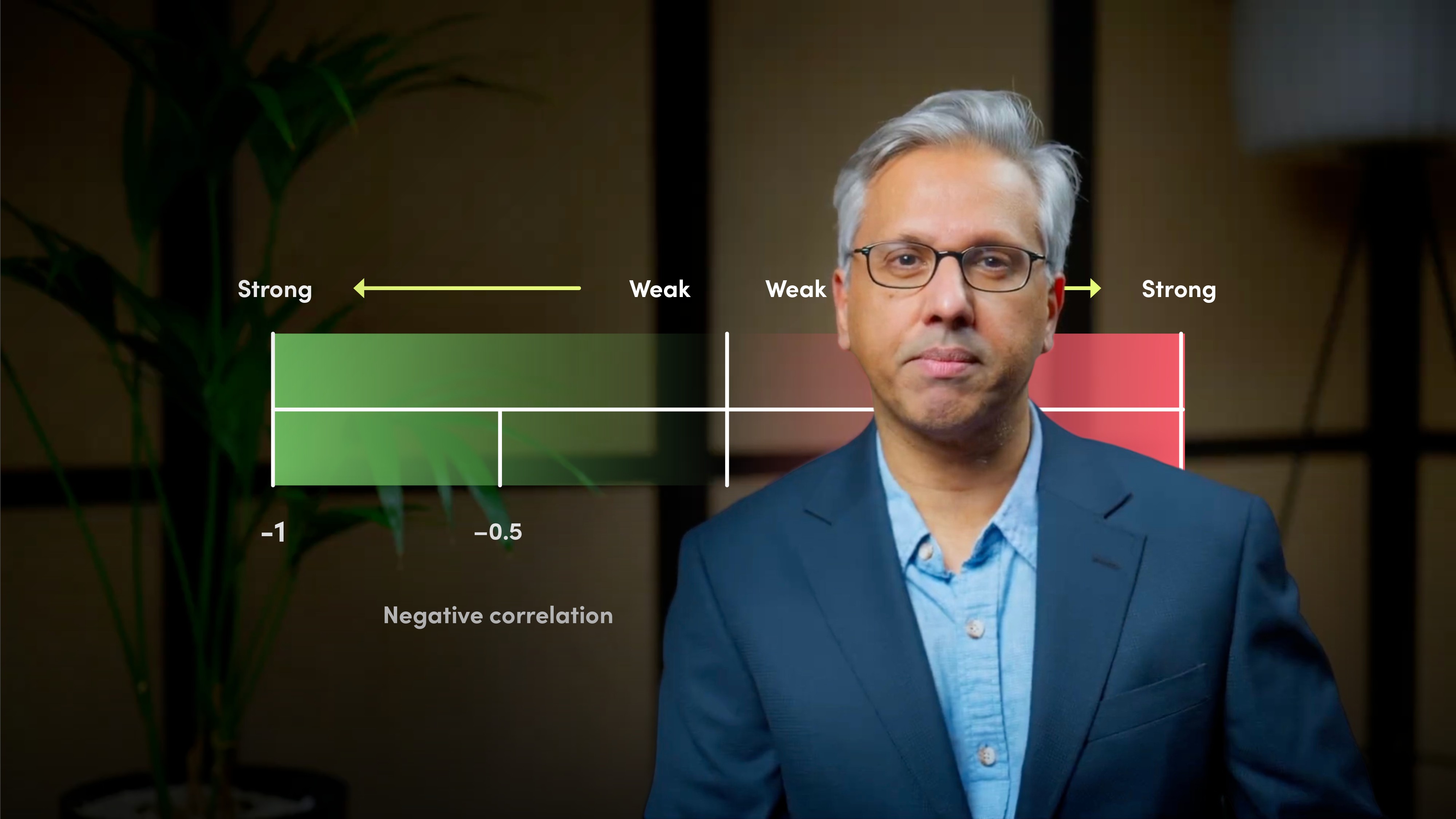
  • Interpret volatility, correlation, and distribution characteristics

  • Outline the three common VaR calculation methods

  • Identify the key pre-calculation steps common to all VaR methods

Overview:

Market rate analysis underpins VaR. You must identify the market variables that drive portfolio value, select a historical window, and confirm data integrity. Plotting time series and histograms helps reveal patterns, outliers and regime shifts. Volatility summarises the scale of daily moves, while correlation shows how risk factors co-move, shaping portfolio risk. VaR can then be estimated using three main methods. Historical Simulation uses actual past returns to capture real-world behaviour. Monte Carlo Simulation creates large sets of hypothetical scenarios to explore a wider range of outcomes. The Parametric method applies volatility, correlation and an assumed distribution to calculate risk analytically. The choice depends on data availability, assumptions, and portfolio complexity.

Subscribe to watch

Access this and all of the content on our platform by signing up for a 7-day free trial.

Summary
How do market rates and their behaviour influence VaR calculations?
VaR reflects how sensitive a portfolio is to movements in the market variables that drive its value. Analysing historical exchange rate data helps identify typical daily movements as well as rare but severe shocks. Plotting the data verifies completeness and shows whether behaviour has changed over time. Summary statistics, such as volatility, skewness, kurtosis, and correlation, highlight the scale of potential losses and how exposures may reinforce or offset each other. Together, these insights ensure the VaR result reflects the true underlying risk.

What are the three main methods used to calculate VaR, and how do they differ?
  1. Historical Simulation uses actual past returns, so it captures real-world behaviours including extreme events, but assumes the past is a good guide to the future.
  2. Monte Carlo Simulation produces thousands of hypothetical return scenarios using volatility and correlation assumptions, allowing flexibility to reflect current market conditions.
  3. Parametric VaR uses a mathematical formula and an assumed probability distribution, making it fast and simple, but more sensitive to modelling assumptions.

The best method depends on data availability, portfolio complexity, and the level of realism required.

What common setup steps are required before applying any VaR method?
All methods start by defining the portfolio exposure, then linking it to the relevant market risk factors, and choosing a time horizon and confidence level. These decisions determine the scope of risk that is being measured. They ensure every VaR approach answers the same question: how much might we lose over a given period, with a given level of certainty?

Subscribe to watch

Access this and all of the content on our platform by signing up for a 7-day free trial.

Gurdip Dhami

Gurdip Dhami

Gurdip has over 25 years of experience in the financial services industry. He has had roles in corporate treasury, risk management, debt capital markets, debt advisory and credit ratings advisory. During this time Gurdip has worked at Standard Chartered Bank, Bank of America, JPMorgan, Resolution Life, and NatWest Markets. He has a BSc in Physics and MSc in Operational Research.

There are no available Videos from "Gurdip Dhami"